

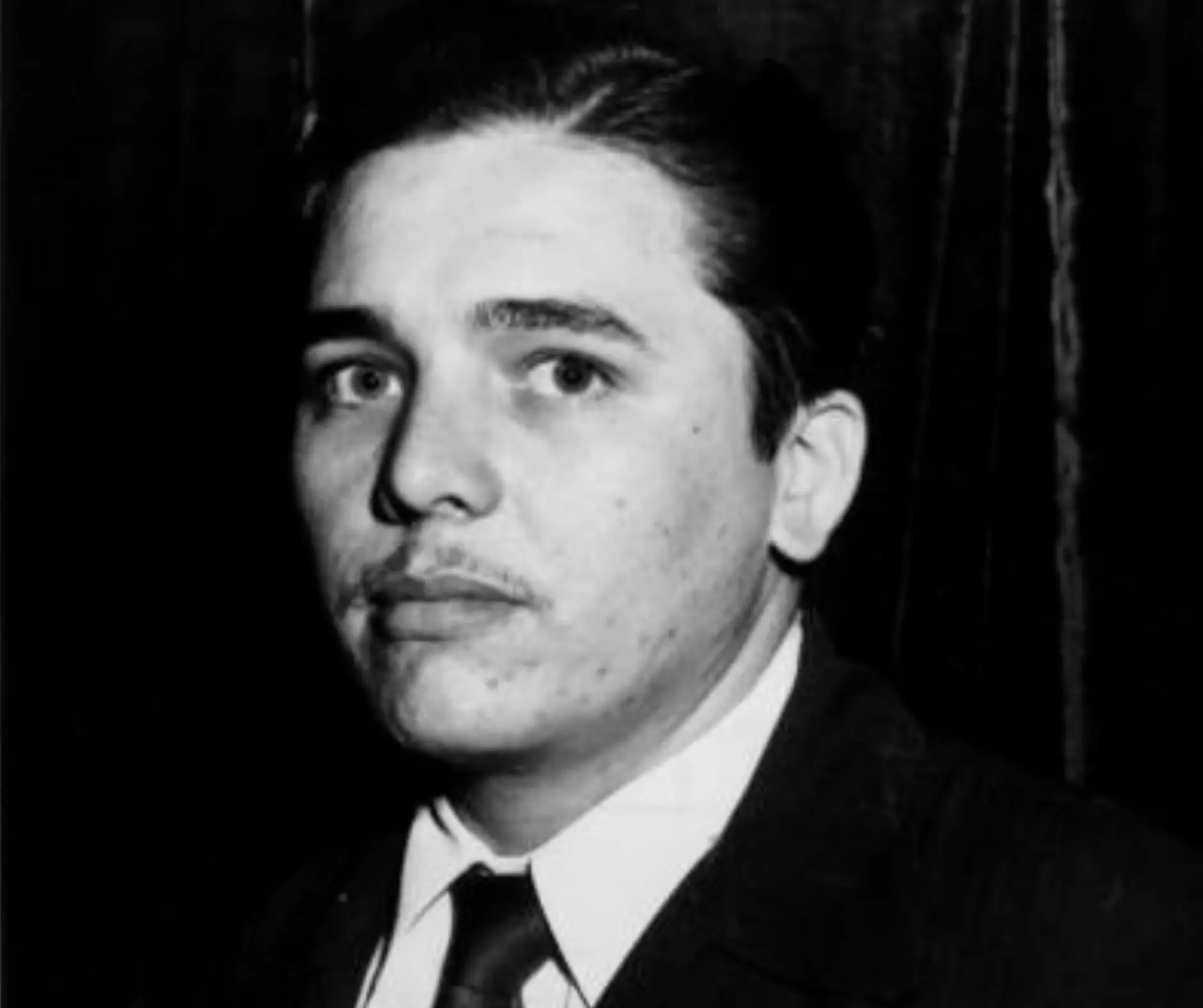
David Samuel Sánchez Herrera was a Puerto Rican painter and graphic artist who rose to prominence in the mid-20th century. His artistic career began in 1951, when he received an award from the Puerto Rican Art Center, which led to his first solo exhibition in San Juan. Seeking to further his education, Sánchez moved to New York in 1957, where he studied on a scholarship from the Brooklyn Museum. That same year, a scholarship from the University of Puerto Rico allowed him to continue his studies in Paris. In 1960, with the support of the Institute of Puerto Rican Culture, he traveled to Mexico to study mosaic techniques.
A member of the “Generation of the Fifties” of Puerto Rican artists, Sánchez eventually settled in Chicago during the 1970s. His work is recognized for its bold black outlines, vibrant colors, and sculptural forms that evoke the appearance of stained glass or woodcuts. Sánchez often drew inspiration from the rural landscapes of Puerto Rico, the daily life of the jíbaro (Puerto Rican peasant), religious themes, and social commentary. These themes imbued his paintings with a sense of cultural identity while also highlighting the social challenges of his time.
Some of his most notable works include Landscape of Corozal (1965), which is housed at the Puerto Rico Museum of Art, and Dajaus Mountain in Barrio Nuevo, Bayamón (1965), part of the collection of the Metropolitan Museum of Art. His ability to fuse Puerto Rican heritage with modernist approaches positioned him as a significant cultural voice and an innovator in visual expression. Through his art, Sánchez celebrated the beauty of the Puerto Rican countryside while also addressing deeper themes such as community, spirituality, and social change. His legacy endures in Puerto Rico and abroad, where his works continue to affirm the richness of Puerto Rican identity and history.